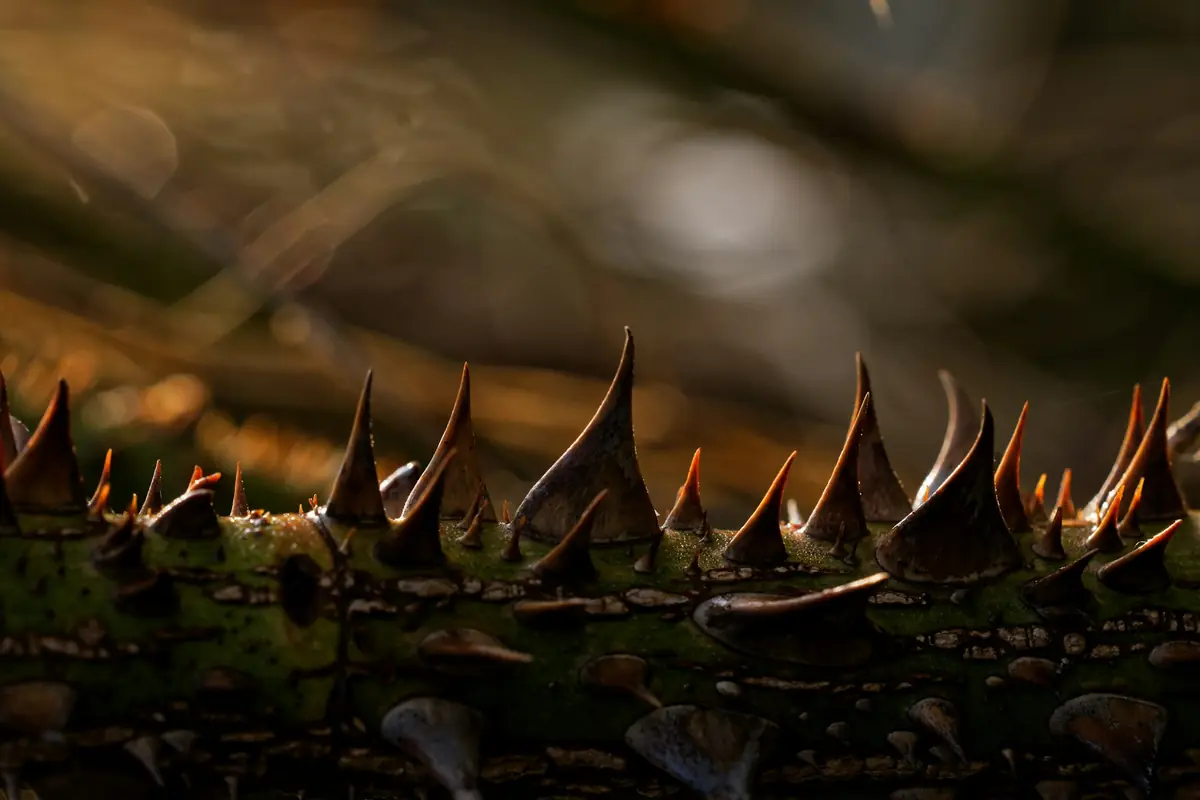
What is cat’s claw? Cat’s claw (Uncaria tomentosa) is a botanical from the Rubiaceae family, native to the Amazon and Central and South American rainforests. The part used is the inner bark and root, and the compounds researchers focus on are oxindole alkaloids. Today it is sold as tea cut bark, capsules, extracts, and chewable tablets.
What is cat’s claw?
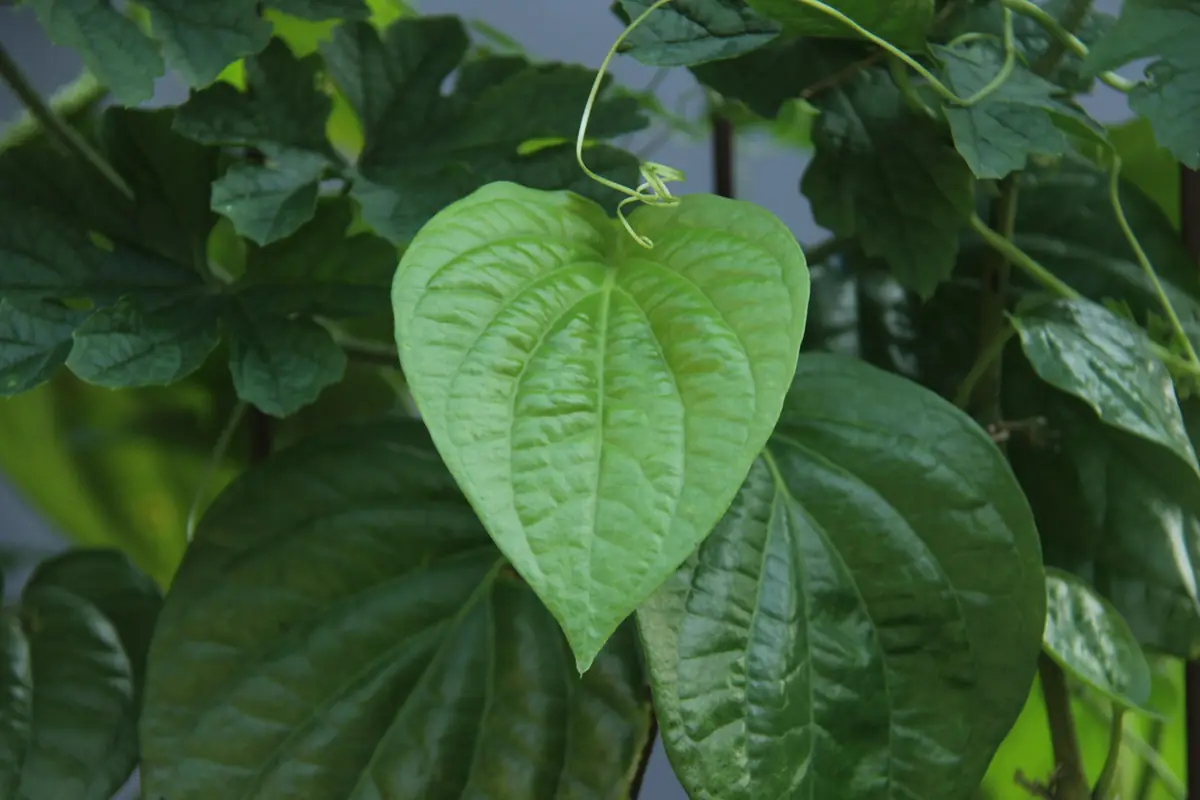
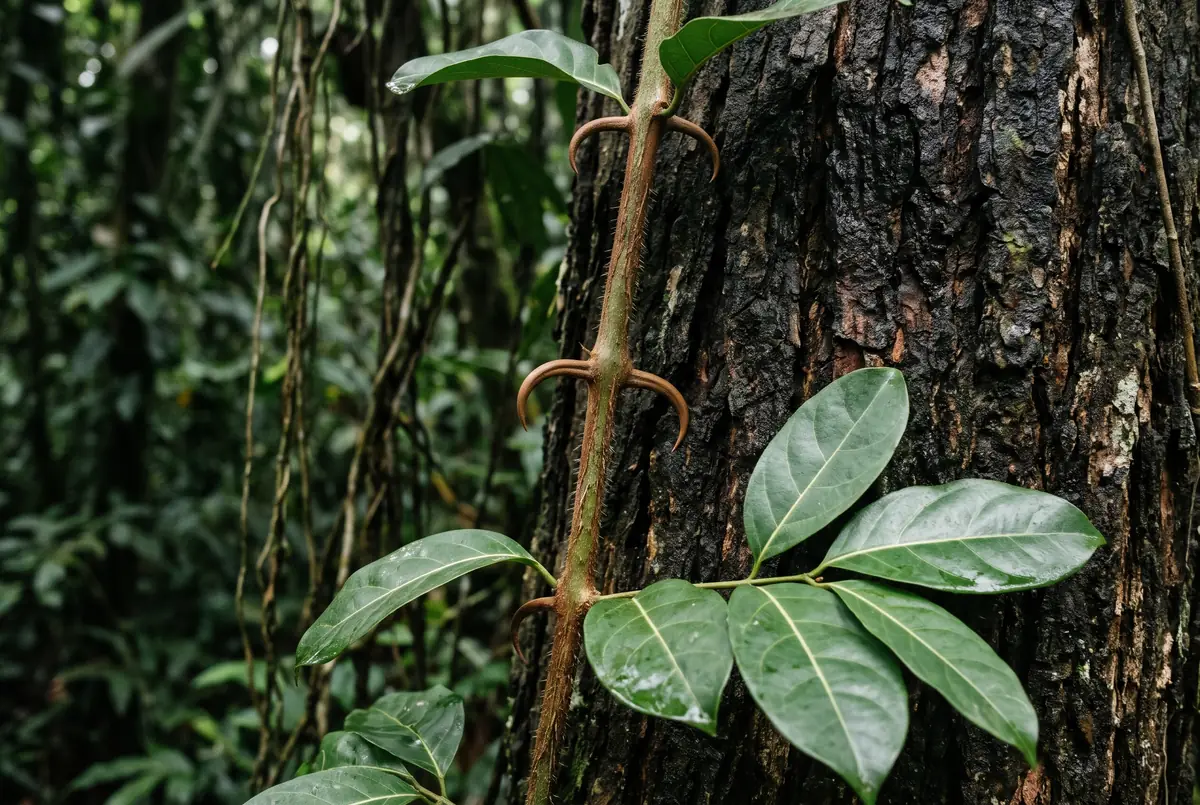
Cat’s claw is a woody vine that climbs up to 30 metres into the rainforest canopy. It gets its name from the pairs of curved, hook-shaped thorns along its stems, which it uses to grip trees. Two species are sold under the name: Uncaria tomentosa, the more common one, and Uncaria guianensis. Both belong to the coffee family, the same plant family as kratom, but cat’s claw is a separate genus.
A short history of cat’s claw
Peoples of the Amazon, including the Asháninka of Peru, have prepared the bark as a tea for generations. Cat’s claw reached North American and European health stores in the 1990s, and today it is one of the best-known Amazonian botanicals.
What’s in cat’s claw?
The compounds researchers focus on are oxindole alkaloids. They come in two groups: pentacyclic ones such as mitraphylline and isomitraphylline, and tetracyclic ones such as rhynchophylline, isorhynchophylline and corynoxeine. The balance between the two groups varies from plant to plant, which is one reason extracts are often “standardized” to a stated alkaloid content.
How cat’s claw is sold today
You’ll find cat’s claw as cut bark for tea, as capsules of powdered bark, as concentrated extracts and, more recently, in fruit-flavored chewable tablets. Tablets list the amount of extract per tablet, for example 100mg.
Is cat’s claw legal?
Cat’s claw is sold as a dietary supplement in the United States and is not a controlled substance. Store policies and local rules can still differ, so check where you live.
Cat’s claw safety notes
- Not recommended during pregnancy or breastfeeding.
- Talk to a doctor first if you take blood thinners, blood-pressure medicine or drugs that affect the immune system, or if you have an autoimmune condition.
- Follow the serving directions on the label, and look for a lab report (COA) for the batch.
Last reviewed by the Learn Botanicals editors. Educational content, not medical advice.